Posts Tagged ‘History’
The American Liberty Pole
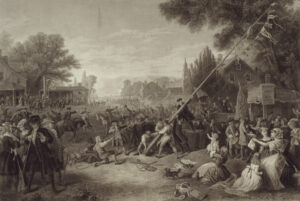
Americans put up Liberty Poles to express political beliefs in the period of the Early Republic. These poles were massive, highly decorated, and highly contested. Both Federalists and Anti-Federalists used them to promote their ideas of what the new Republic should reflect in terms of “liberty.” Join us to discuss how different early American political…
Read MoreBefore Trans: Three Gender Stories from 19th Century France
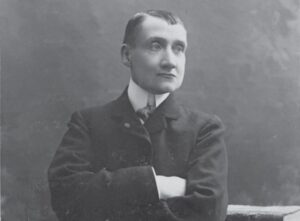
Professor Rachel Mesch guides us through three compelling lives and careers in 19th-century France. The lives of French writers, Jane Dieulafoy (1850–1916), Rachilde (1860–1953), and Marc de Montifaud (1845–1912), did not conform to nineteenth-century notions of femininity. In their work, they contested the conventional norms, and refused to be categorized by traditional gender standards. These…
Read MoreLoving Day: 2024 Encore

It’s June 12th! Loving Day! You might think that Loving Day is Valentine’s Day, February 14th, but it’s not, it’s today, June 12th. If you don’t know what Loving Day is, let me tell you a story, a love story, in this brief episode. In the 1950s, a 17-year-old young man named Richard fell in…
Read MoreHeather Haley: Historian for the US Navy

Heather Haley, a civilian historian for the United States Navy, enlightens us about the work of a historian outside traditional academic institutions. She works for the US Naval History and Heritage Command, doing naval history research, finding and preserving historical records related the the Navy and its ships, and writing analytical works. And she encourages…
Read MoreComing Out Republican: a History of the Gay Right
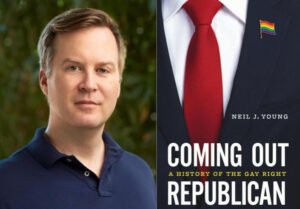
Dr. Neil Young helps us understand how and why gay Republicans regularly faced condemnation from both the LGBTQ+ community and their own political party. They’ve been active and influential for decades, however. Gay conservatives were instrumental, for example, in ending “Don’t Ask, Don’t Tell” and securing the legalization of same-sex marriage—but they also helped lay…
Read MoreMalcolm Browne and the Self Immolation of Thích Quảng Đức
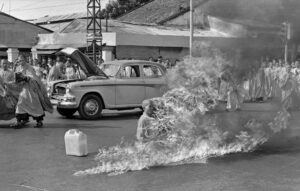
Ray Boomhower joins us to discuss how the most unlikely of war correspondents, Malcolm W. Browne, became the only Western reporter to capture Buddhist monk Thích Quảng Đức’s horrific self-immolation on June 11, 1963. Thích Quảng Đức made his ultimate sacrifice to protest the perceived anti-Buddhist policies of the Catholic-dominated administration of South Vietnam’s president…
Read MoreChurchill’s Wartime Speeches: the Untold Story
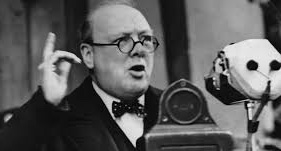
Professor Richard Toye explains the background and context of Winston Churchill’s famous World War II speeches, from how they were written, to how they were delivered, to how the public reacted. Not only is it much more complex than the legend has it, the full history provides us with a much greater understanding of World…
Read MoreThe Wild West
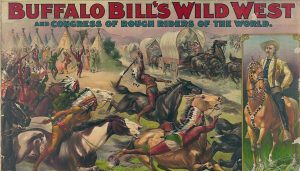
“The Wild West” is one of the strongest conceptions in American history. But “where” was the west? How “wild” was it? “Who” settled it? Did settlers build the west with their hands? And how many of the stories about settlers and Native Americans are myths or misconceptions? Professor Edward O’Donnell helps us explain it all,…
Read MoreThe Myth of Colorblind Christians
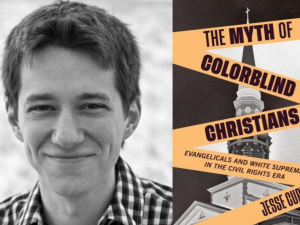
Dr. Jesse Curtis shows us how white evangelicals in the 20th century US grew their own institutions and created an evangelical form of whiteness, infusing the politics of colorblindness with sacred fervor. They deployed a Christian brand of colorblindness to protect new investments in whiteness. While black evangelicals used the rhetoric of Christian unity to…
Read MoreAmericans Bailing Out the French
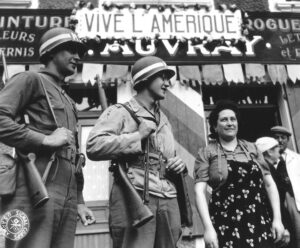
Donald Trump talks about Americans being “suckers” to their allies. Is Uncle Sam really “Uncle Sucker”? Did the United States really “bail the French out in two world wars,” or is it a blustering, bigoted myth? Professor Philip Nash joins us to discuss what happened in World Wars I and II, and whether the United…
Read More